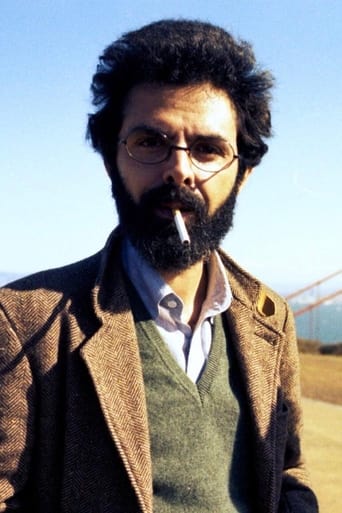
سهراب شهید ثالث
SuivreRéalisation · Né(e) en 1944 · Qazvin, Iran
Biographie
Sohrab Shahid-Saless was born in Tehran in 1944 to a middle-class family and lived in Tehran. Shahid-Saless was a storyteller as a child, with a passion for visualizing his narrations. In 1963, Shahid-Saless left Iran for Vienna, where he attended a film school and an acting school at the same time, but his studies were discontinued there in 1967 due to a sudden diagnosis of tuberculosis. In the midst of treatment, he left for Paris to continue his film studies at the prestigious Independent Conservatory of French Cinema, and shortly thereafter, in 1968, he returned to Iran. Upon his return to Tehran, Shahid-Saless began work with the Iranian Ministry of Culture as a documentary filmmaker, where he produced multiple short films and documentaries, partly on the topic of traditional dance amongst different Iranian ethnic groups. In the course of his stay in Iran (1968–74), he produced two major feature films, Yek ettefāq-e sāda (A Simple Event, 1973) and Ṭabiʿat-e bijān (Still Life, 1974), both of which won major international awards for their social realist depiction of life in Iran and for their innovative cinematographic and experimental style. Shahid-Saless also made several short films for the Ministry of Culture and Arts. He made many commissioned films on the local folkloric dances of various ethnic groups. He also started making short documentaries depicting the unnerving condition of life among the working class. Unsurprisingly, the political subversive message of these films was disliked by the government, and Shahid-Saless was forced to leave the country. Settled in Germany in 1974, Shahid-Saless started producing documentaries for the German media. The movies he made gained him further international recognition, and he continued making documentary and feature films for major German television programs. He made his last movie, Rosen für Afrika, in 1991 for German television. In 1992, he left Germany for the United States to join his family. He died from a chronic illness related to his liver from which he suffered throughout his life. Shahid-Saless is known to be a pioneer of the new wave of Iranian cinema. In his own words, his cinema intends to document the “antagonism between man and society”. In the course of his oeuvre, he viewed the role of cinema as “to make conscious of indignity and inhumanity of life".
Connu pour
Filmographie
 4.8
Rosen für Afrika
1992
1992 · Réalisation
 10.0
Ein Unding der Liebe
1988
1988 · Screenplay
 7.5
Wechselbalg
1987
1987 · Réalisation
List z Kábul
1987
1987 · Réalisation
 7.0
Hans - Ein Junge in Deutschland
1985
1985 · Réalisation
 9.0
Der Weidenbaum
1984
1984 · Réalisation
 6.3
Utopia
1983
1983 · Réalisation
 10.0
Empfänger unbekannt
1983
1983 · Réalisation
 5.8
Anton P. Cechov - Ein Leben
1981
1981 · Réalisation
 6.5
Ordnung
1980
1980 · Réalisation
 5.0
Grabbes letzter Sommer
1980
1980 · Réalisation
 7.0
Die langen Ferien der Lotte H. Eisner
1979
1979 · Réalisation
 6.6
Tagebuch eines Liebenden
1977
1977 · Réalisation
 7.1
Reifezeit
1976
1976 · Réalisation
 7.0
در غربت
1975
1975 · Réalisation
 7.0
Nature morte
1974
1974 · Réalisation
 5.9
یک اتفاق ساده
1973
1973 · Réalisation
 7.0
سیاه و سفید
1972
1972 · Réalisation

آیا...؟
1971
1971 · Réalisation

رقصهای تربتجام
1970
1970 · Réalisation
دومین نمایشگاه آسیایی
1969
1969 · Réalisation
رقص بجنورد
1969
1969 · Réalisation
آنسوی هیاهو
1968
1968 · Man Waiting for the Bus (uncredited)